|
Evan D. Collins, M.D.
Methodist Dept of Orthopedics
Office: 713-441-3535
www.drevancollins.com
What is Repetitive Stress Injury?
Categorizing Pathology
- Structural Problem
- Disease-Biology
- Capacity exceed a limit
Many Confusing Terms
- Repetitive stress injury (RSI)
- Cumulative trauma disorder (CTD)
- "Overuse syndrome"
- Work-related musculoskeletal disorders (WRMSDs)
Background
- "Epidemic" in Australia in the 1980s
- Similar "epidemic" in the U.S. in the 1990s - Spawned the development of ergonomics
- Disagreement in the hand surgery literature over the veracity of repetitive stress injury
- Sports literature
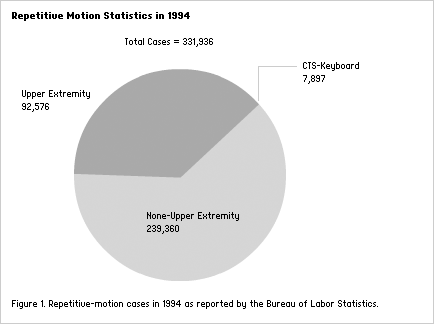
Pathophysiology
- Pitner defined repetitive stress as a level of repetitive microtrauma that exceeds the ability of normal tissue to adapt
- Repetitive microtrauma refers to discrete microscopic or molecular disruption of tissue after many cycles of stress, each of which is in the "physiologic" range
Tendon
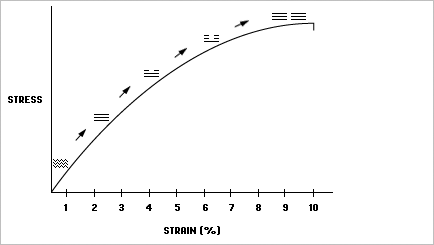
- Curwin showed the molecular collagen structure of tendons can elongate by ˜4% without tissue damage
- Between 4 and 8%, cross-links rupture and the fibers slide past each other
- Concept of creep implicated as possible mechanism in repetitive loading injuries of tendons
- Shear stress or tension overload
Natural History of Tendinitis
- Four Stages
- Inflammation
- Proliferation
- Maturation
- Fibrosis
Muscle
- Muscle soreness develops 12-24 hours after unaccustomed activity and peaks at 1-3 days later
- Three theories of etiology of muscle pain
- Increased levels of creatinine kinase
- Derangements in calcium metabolism
- Ischemia secondary to inability to maintain ATP stores
Bone
- Classic example of repetitive injury to bone is a stress fracture of the lower extremity
- Pain is gradual, well-localized, follows a period of unaccustomed activity
- Stress fracture pathophysiology well discussed in orthopaedic literature
Nerve
- Role of repetitive stress injury as a possible etiology for many compression neuropathies of the hand and wrist is heavily debated
- Not much pathophysiologic data to support
Musculotendinous Overuse Syndromes
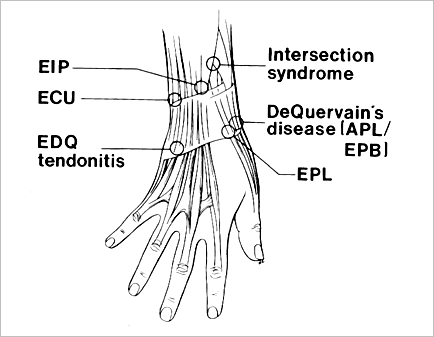
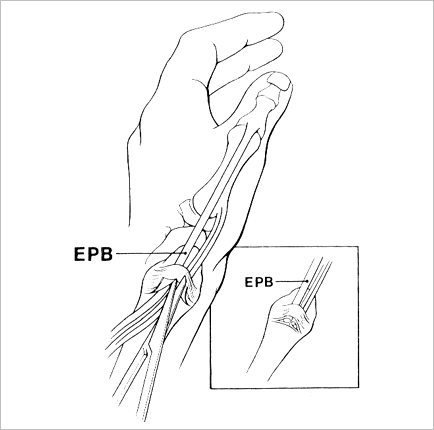
DeQuervain's Syndrome
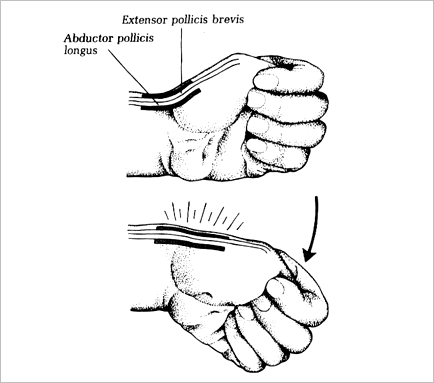
- Stenosing tenosynovitis of 1st dorsal compartment
- Most common tendonitis of the wrist in athletes
- APL and EPB course in this sheath, often contain subsheath between APL and EPB
- Shear stress from repetitive motion (especially radial and ulnar deviation combined with flexion and extension of the wrist) results in inflammation of the tenosynovium.
- Associated with golf, racquet sports, and fishing
Finkelstein’s Test
1st Dorsal Compartment Release
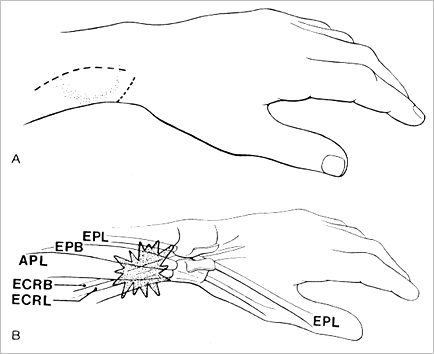
Intersection Syndrome
- Inflammation at the point of crossing of the "outriggers" (APL and EPB) with the radial wrist extensors (ECRL and ECRB)
- Oarsmen and racquet sports are prone to this
- Diagnostic injections
- Splints
ECU Tendinitis
- Second most common sports-related overuse syndrome according to Wood
- Seen with motions requiring excessive ulnar deviation
- Common in tennis players’ nondominant hand who use two-handed backhand
- Provocative maneuvers
- Diagnostic injections
- Check for subluxation
FCR Tendinitis
- Pain with resisted flexion of wrist
- Abatement of symptoms with diagnostic injection confirms diagnosis
- Concept of "radial tunnel" as described by Gabel
- FCR release
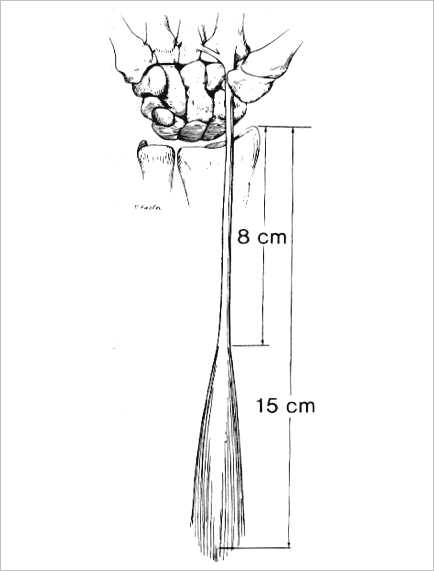
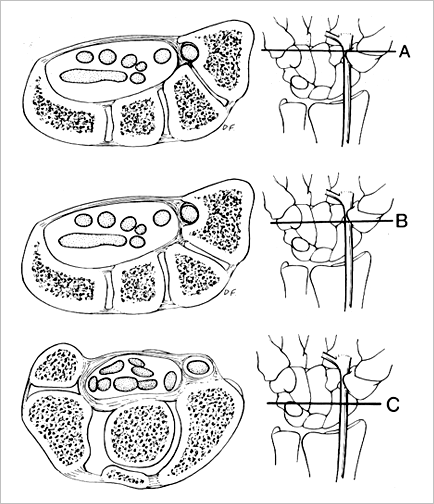
FCR Release
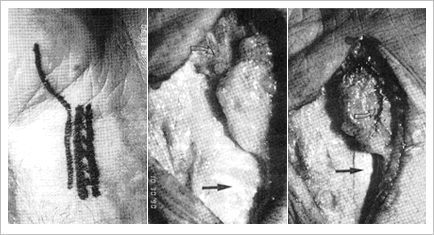
FCU Tendinitis
- Pain with resisted flexion and ulnar deviation of the wrist
- May or may not involve pisotriquetral arthritis
- Check for "misinform boost"
- Diagnostic injections
- Related to racquet sports in particular
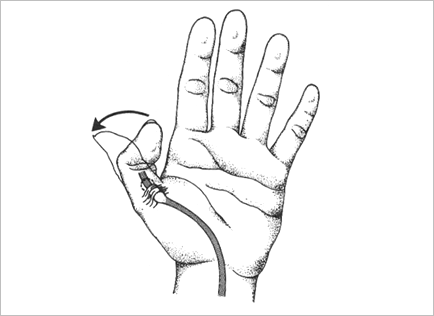
Stenosing Tenosynovitis (Trigger finger)
- Usually considered secondary to degenerative changes; however, it can be see as a result of contact pressure on the distal palm by a bat, racquet, or golf club
- Repetitive contact can lead to acute inflammation which can produce trigger finger in athletes
- Injection, splints
- A1 pulley release
Focal Dystonias
- Graphospasm or Writer's cramp
- Fairly common among piano players and writers
- Crampy pain with specific activity
- Botox injections have been recently found to be successful for treatment
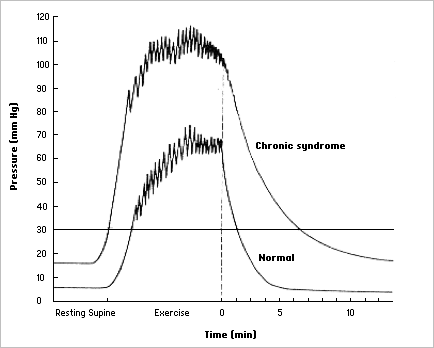
Exertional Compartment Syndrome
- Rare syndrome, but known to occur in the anterior compartment of the lower leg
- Also described cases in the upper extremity
- Individuals such as oarsmen that sustain grip on a tool are susceptible
- Diagnosis and treatment are the same as any compartment syndrome
Case of chronic exertional compartment syndrome of anterior calf
Carpal Tunnel Syndrome
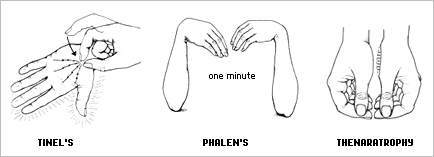
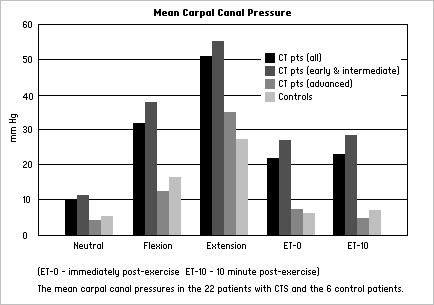
- Gelberman demonstrated elevated carpal tunnel pressure within the carpal canal with CTS.
- Szabo's study suggests changes in carpal pressure with position and exercise in normal patients and CTS patients
- Repetitive flexion and extension of wrist may "pump up" the carpal canal pressure
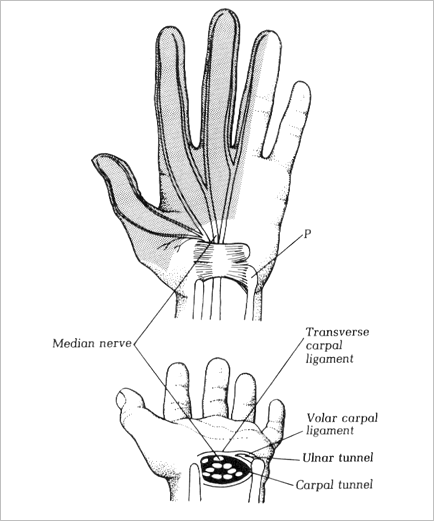
Szabo's study on dynamic carpal pressures
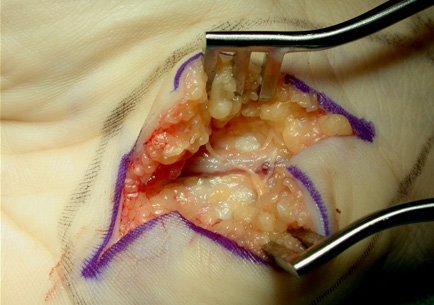
Ulnar Tunnel Syndrome
- Also known as Cyclist's Palsy
- Compression of ulnar nerve in Guyon's canal
- Jackhammer operators,long-distance cyclists, and individuals active in Martial Arts
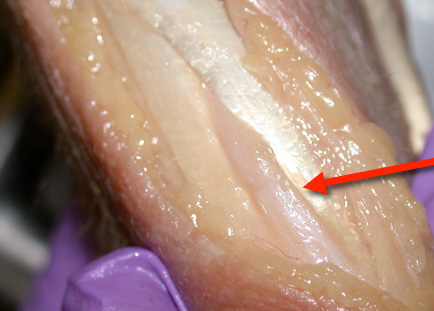
Handcuff neuropathy
- Synonymous with Wartenberg's syndrome
- Compression of the superficial radial nerve where it exits under the brachioradialis muscle
- Can occur secondary to tight handcuffs
- If patient has positive Tinel's, may need to do operative nerve decompression

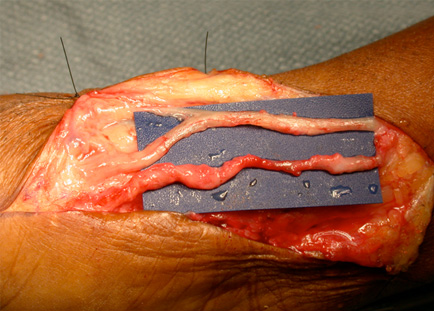
Hypothenar Hammer Syndrome
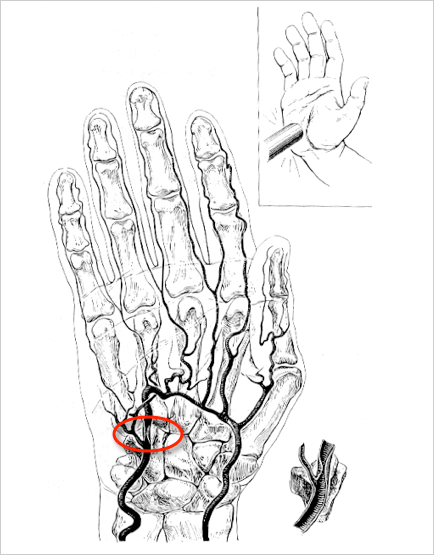
- Related to Judo, Karate, Cycling, Jackhammer usage similar activities to ulnar tunnel syndrome.
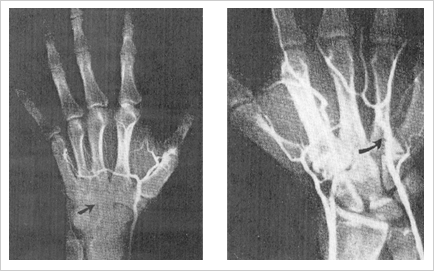
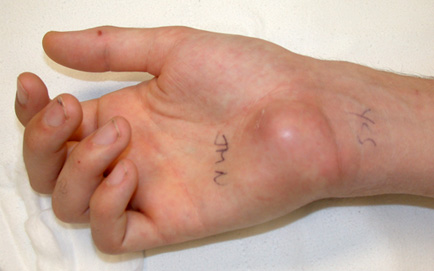
- Trauma to ulnar artery distal to Guyon's canal
- Pts present with digital ischemia, cold intolerance, pain in the palm
- Remember Allen's test
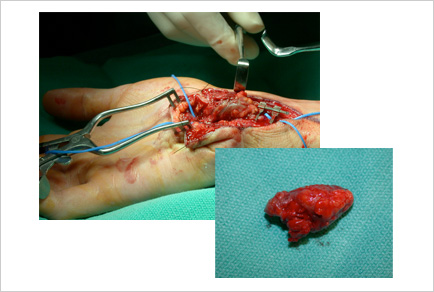
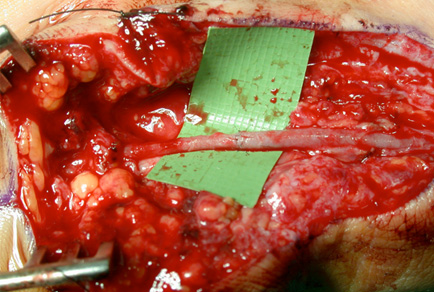
Bowler's Thumb
- Described by Dobyns in 1972
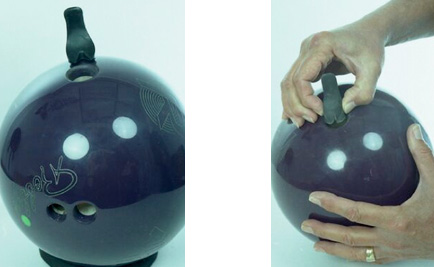
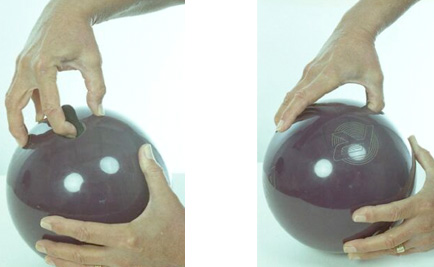
- Compression neuropathy of ulnar digital nerve of thumb over sesamoid bone secondary to continuous pressure from the edge of the thumb hole in the bowling ball
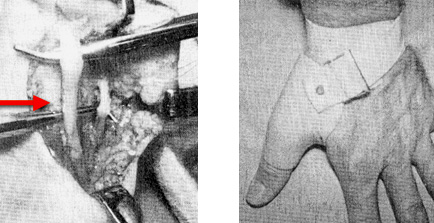
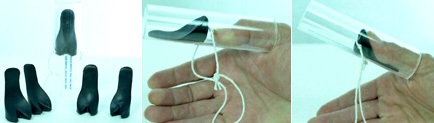
- Orthotic or other splint can be worn
- Device to keep thumb straight can be placed in thumb hole of ball
Digital Ischemia in Baseball Players
- Few case reports
- Lowery did study and found significant incidence of digital ischemia in baseball catchers
- Recommendation was to increase padding in gloves
- Itoh found digital ischemia in pitchers
- Thought to be secondary to lumbrical canal compression or vasospasm secondary to overstimulation of digital sympathetics
|




